Choosing the right ecommerce platform is one of the most important decisions you’ll make for your online business. The platform you select affects everything from your launch timeline and customer experience to future scalability and operational costs. While Shopify has become one of the world’s most popular ecommerce solutions, it isn’t always the perfect fit. In some cases, a custom-built ecommerce website delivers greater flexibility and long-term value.
So, is Shopify better than custom development? The answer depends on your business goals, budget, and the level of customization you need. This guide compares Shopify vs Custom Development to help you decide which approach is best for your business.
Understanding Shopify and Custom Ecommerce Development
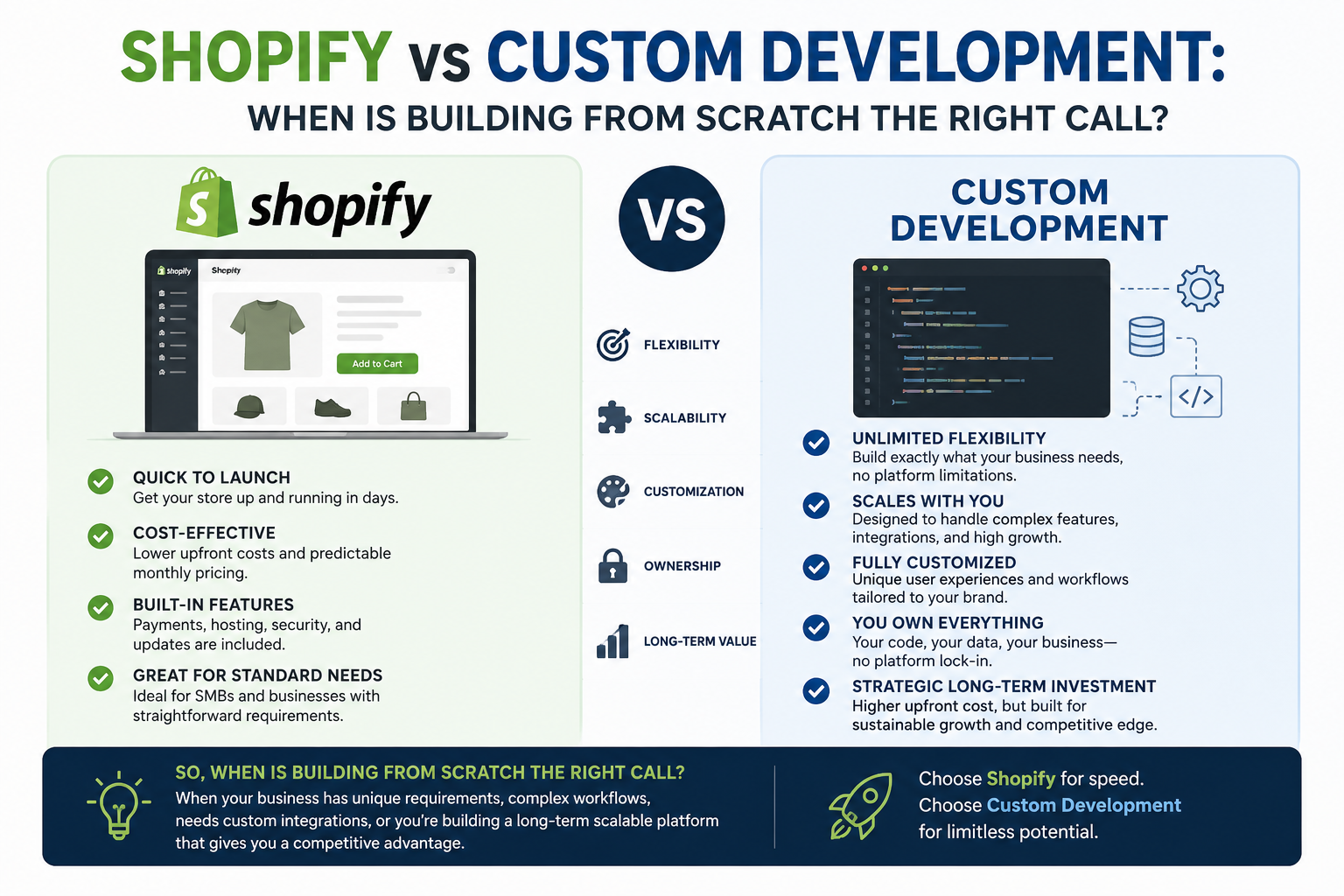
Shopify is a cloud-based ecommerce platform that allows businesses to launch an online store quickly without worrying about server management or software updates. It comes with built-in features, a large app marketplace, and secure payment integrations, making it a popular choice for startups and growing brands.
On the other hand, custom ecommerce development involves building an online store from the ground up. Instead of relying on predefined features, developers create a platform tailored to your business processes, customer journey, and future growth plans.
When considering Shopify or custom development, the decision should focus on your operational requirements rather than simply comparing features.
Shopify vs Custom Website: Key Differences
Both options can power a successful ecommerce business, but they offer different advantages.
Development Speed
If speed matters, Shopify has a clear advantage. Most businesses can launch within a few weeks using pre-built themes and apps.
A custom-built ecommerce website takes considerably longer because every feature is designed, developed, tested, and optimized specifically for your business.
Customization
One of the biggest advantages of custom ecommerce website development is complete flexibility. You can build unique checkout experiences, advanced product configurators, personalized pricing, custom dashboards, and seamless integrations with internal systems.
Shopify supports extensive customization through themes, apps, and APIs, but there are still platform limitations that some businesses eventually outgrow.
Cost
The discussion around Shopify vs custom website cost should include more than the initial investment.
Shopify usually has lower upfront costs, but ongoing expenses may include:
- Monthly subscription fees
- Premium apps
- Paid themes
- Transaction fees (depending on the payment gateway)
- Third-party integrations
Custom development requires a higher initial investment, but businesses gain complete ownership and avoid recurring platform subscription fees. For companies with complex operations or long-term expansion plans, the investment often delivers greater value over time.
When Should You Choose Shopify?
Shopify is an excellent choice if your priority is launching quickly without managing technical infrastructure.
Shopify works particularly well for:
- Startups validating a new business idea
- Small and medium-sized ecommerce stores
- Direct-to-consumer brands
- Businesses with standard ecommerce workflows
- Companies that want a low-maintenance solution
If your business mainly requires product management, secure payments, inventory tracking, and marketing integrations, Shopify provides everything needed to get started.
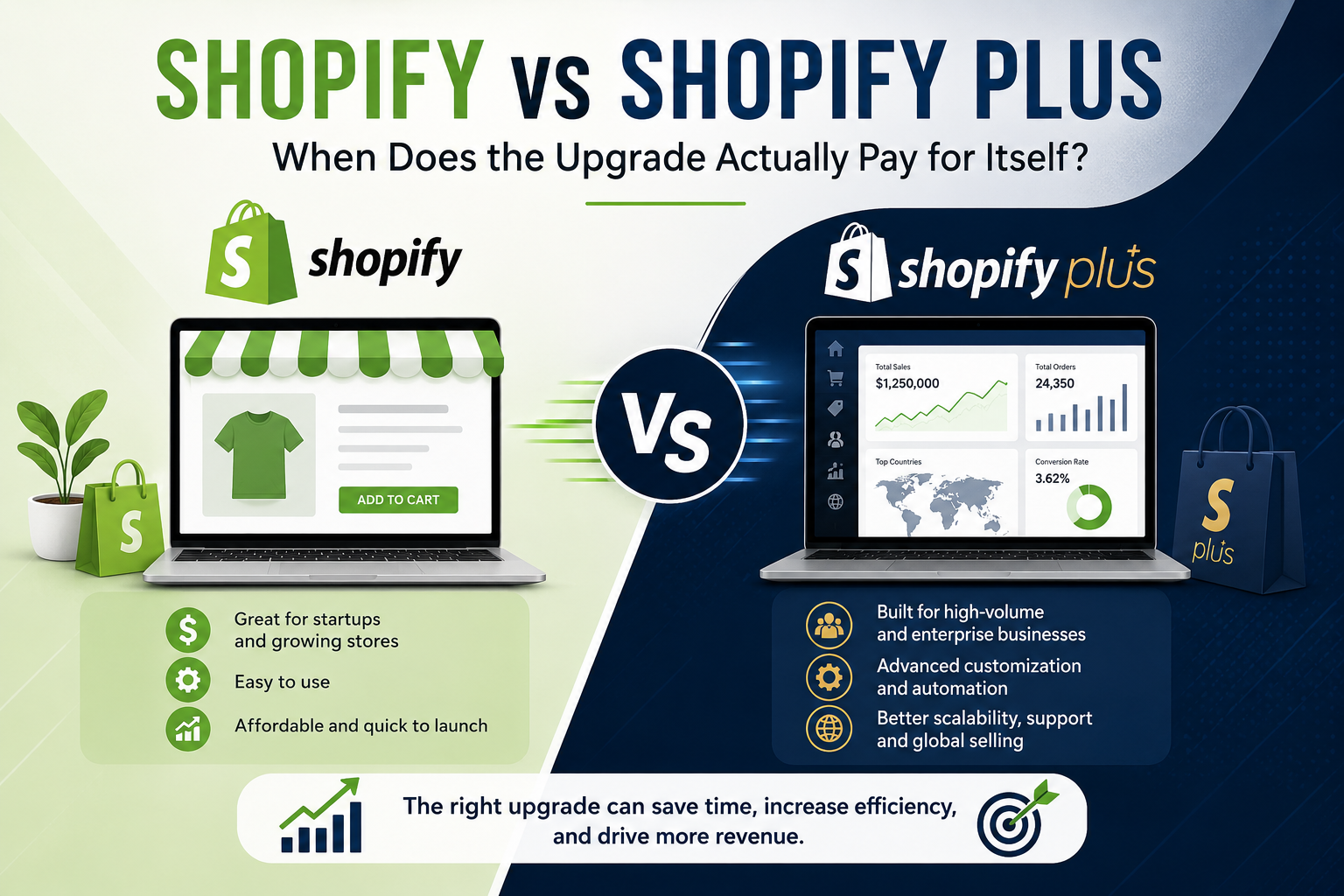
As your business grows, you may also wonder whether Shopify Plus is the next logical step before investing in a completely custom platform. Our guide on Shopify vs Shopify Plus: When Does the Upgrade Actually Pay for It? explains when upgrading makes financial and operational sense and can help you plan your long-term ecommerce strategy.
When to Build a Custom Ecommerce Website
There comes a point where standard functionality is no longer enough.
When should you choose custom ecommerce development? Consider it if your business requires:
- Complex B2B pricing models
- Dealer or distributor portals
- Marketplace functionality
- Custom checkout workflows
- Enterprise ERP or CRM integrations
- Subscription management with unique billing logic
- Highly personalized customer experiences
A custom ecommerce development company can design features specifically around your business instead of adapting your processes to fit platform limitations.
Shopify vs Custom Development for Growing Businesses
Growth changes everything.
Many businesses start with Shopify because it offers speed and affordability. As product catalogs expand, international markets open, and operational complexity increases, some companies begin exploring custom ecommerce development vs Shopify to gain more control.
For example, a manufacturer selling through distributors may require customer-specific pricing, approval workflows, and inventory synchronization with ERP software. These requirements are often easier to achieve through custom website development for ecommerce businesses than relying on multiple third-party apps.
The right platform isn’t always the one with the most features—it’s the one that supports your next stage of growth.
Performance, Scalability, and SEO
Both Shopify and custom platforms can perform well when implemented correctly.
Shopify includes secure hosting, content delivery networks (CDNs), SSL certificates, and automatic software updates. It also offers strong SEO fundamentals, including customizable meta tags, clean navigation, mobile responsiveness, and blogging capabilities.
A custom platform gives developers greater control over technical SEO, page speed optimization, server configuration, structured data, and performance tuning. This flexibility can be valuable for enterprise businesses with advanced technical requirements.
Ultimately, platform performance depends on proper development, optimization, and ongoing maintenance rather than the platform itself.
Which Is Better: Shopify or a Custom Website?
There is no universal answer.
Choose Shopify if you want:
- Faster deployment
- Lower upfront costs
- Easy maintenance
- Access to a large ecosystem of apps
- Standard ecommerce functionality
Choose a custom solution if you need:
- Unlimited customization
- Enterprise integrations
- Advanced workflows
- Greater control over infrastructure
- Long-term platform ownership
Instead of asking, “Which is better Shopify or custom website?”, ask which solution best supports your business over the next five years.
Final Thoughts
The debate around Shopify vs Custom Development isn’t about finding a single winner. It’s about selecting the solution that aligns with your business goals, operational complexity, and future plans.
For many businesses, Shopify provides an excellent foundation for launching and scaling an online store. Others eventually reach a stage where custom ecommerce development becomes the smarter investment because it offers greater flexibility, control, and scalability.
If you’re evaluating your options and need expert guidance, the team at Sinelogix Technologies can help you assess your requirements and recommend the right ecommerce solution. Whether you need Shopify development services, Shopify custom development, or a fully custom-built ecommerce website, choosing the right technology today can create a stronger foundation for tomorrow’s growth.
Frequently Asked Questions
Is Shopify better than custom development?
Shopify is ideal for businesses that want a fast, reliable, and easy-to-manage ecommerce platform. Custom development is better suited for organizations with unique workflows, complex integrations, or enterprise-level requirements.
What are the benefits of custom ecommerce development?
Custom development offers complete flexibility, ownership of your platform, tailored customer experiences, advanced integrations, and the ability to build features specific to your business.
When should we choose custom ecommerce development?
If your business has outgrown standard ecommerce functionality, requires custom workflows, or needs enterprise integrations, custom development may provide better long-term value.
Can we start with Shopify and move to a custom platform later?
Yes. Many businesses begin with Shopify to validate their business model and later migrate to a custom solution as operational complexity and growth requirements increase.