Choosing between Magento vs Shopify is one of the most common challenges agencies and consultants face when guiding clients in eCommerce. The wrong recommendation can lead to higher costs, limited scalability, or even a complete platform migration later.
This guide breaks down both platforms in a practical, easy-to-understand way. By the end, you’ll know exactly which platform to recommend based on your client’s goals, budget, and growth plans.
Magento vs Shopify at a Glance
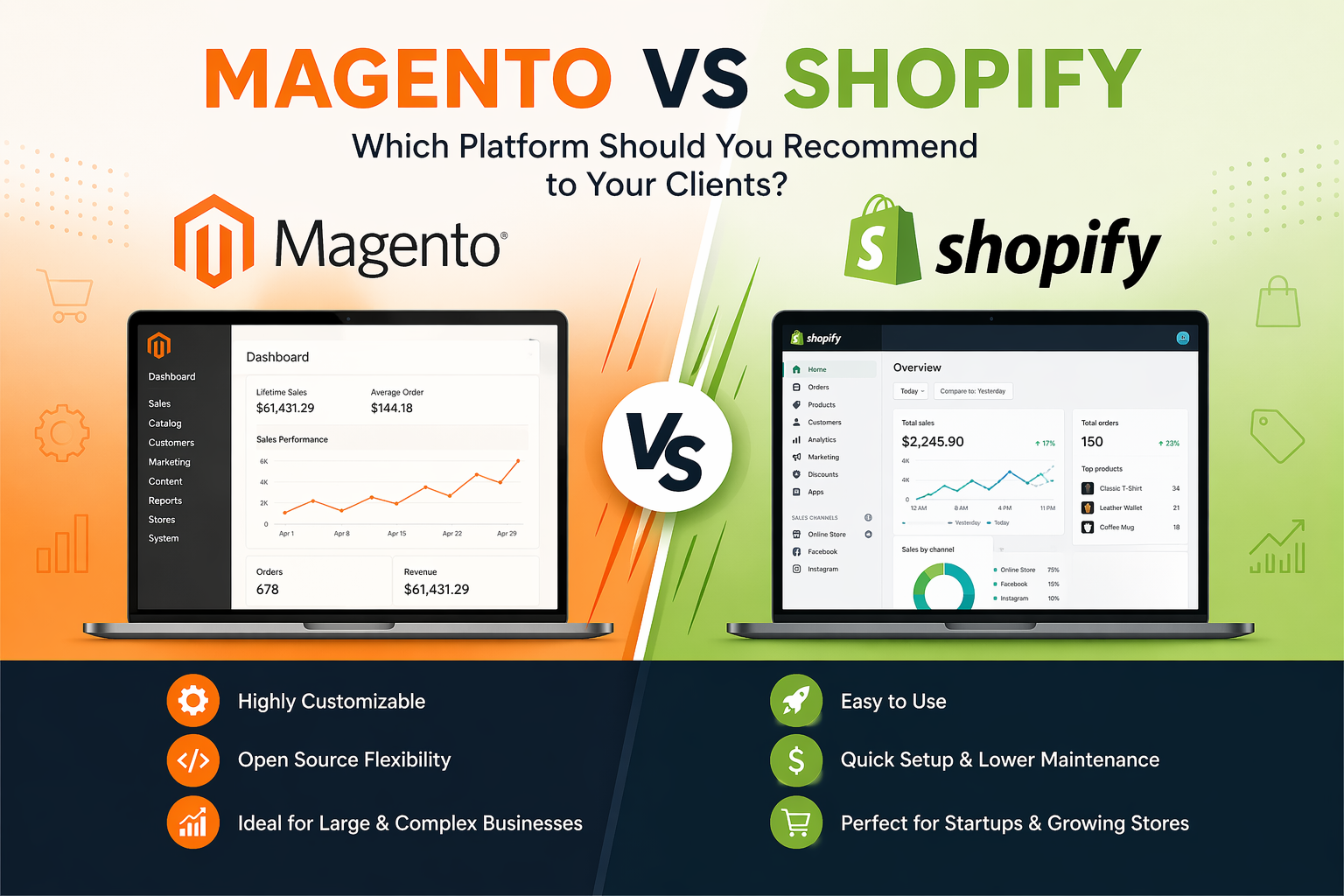
At a high level, the difference comes down to control vs convenience.
- Magento (Adobe Commerce): Open-source, highly customizable, ideal for complex and large-scale businesses
- Shopify: Hosted platform, easy to use, perfect for quick launches and minimal maintenance
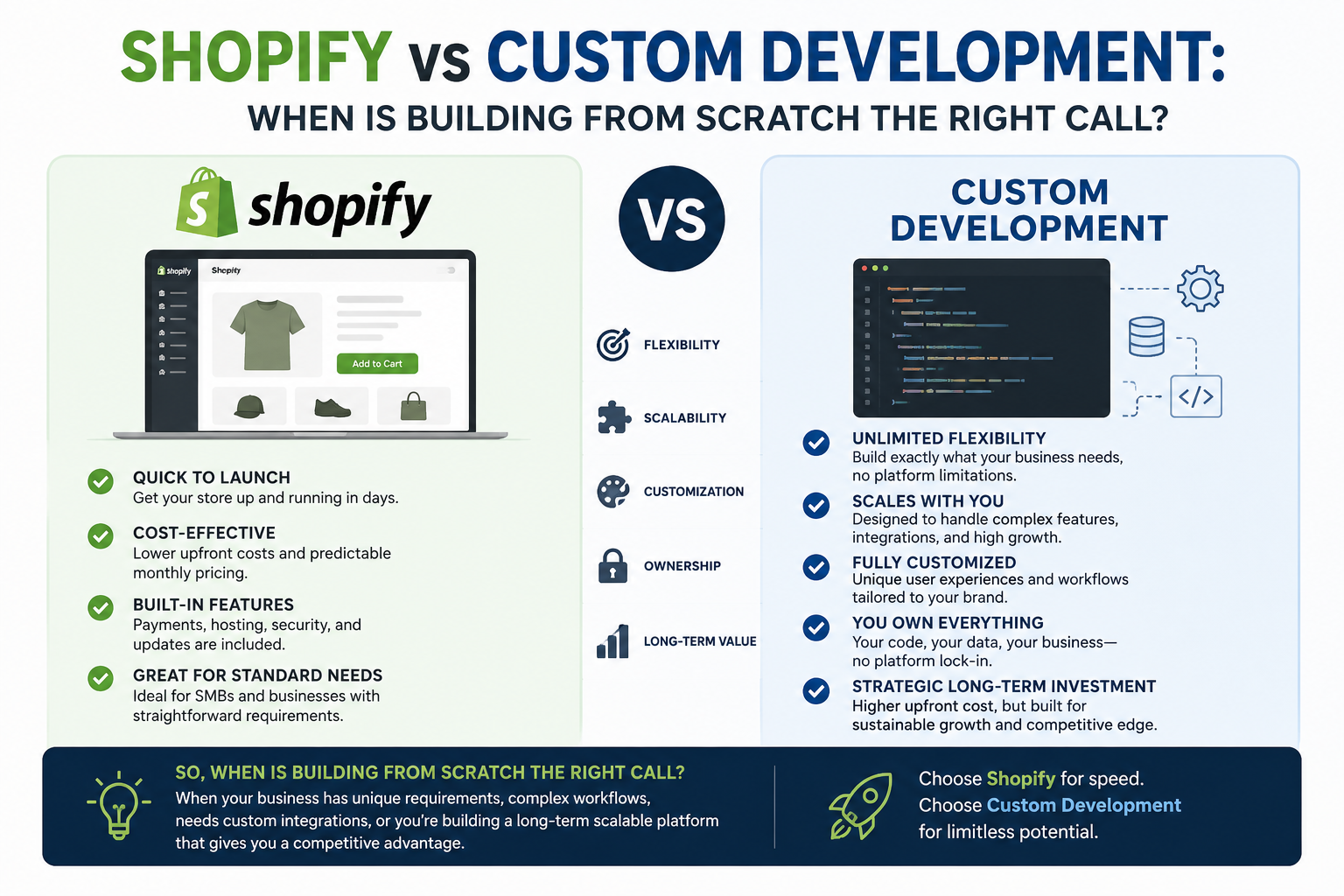
If your client wants full control and flexibility, Magento stands out. If they want simplicity and speed, Shopify often wins.
Understanding the Core Differences
Magento offers unmatched flexibility. A skilled Magento web developer can build highly customised features, integrations, and workflows. This makes it a strong choice for businesses with unique requirements.
Shopify, on the other hand, removes technical complexity. With built-in hosting, security, and a simple dashboard, even non-technical users can manage their store efficiently. Many businesses prefer working with a Shopify web development company because of faster deployment timelines.
Ease of Use and Setup
Ease of use is where Shopify clearly leads. A store can go live within days using pre-built themes and apps. This is why many startups choose to hire Shopify web developer resources for quick implementation.
Magento requires more effort. Setting up a Magento store involves hosting, development, and configuration. While a Magento web development company can handle this, the process takes longer and requires a higher investment.
Customisation and Flexibility
Magento excels in customisation. Businesses with complex pricing rules, multi-store setups, or custom workflows benefit from magento web development services.
Shopify offers customisation through apps and themes. While this works well for most businesses, it has limitations. Advanced customisation often requires workarounds or additional apps, which can increase costs over time.
Performance and Scalability
Magento can handle large-scale operations with thousands of products and high traffic volumes. However, performance depends on hosting and optimisation. A reliable Magento e-commerce web development company ensures the store runs efficiently.
Shopify provides built-in scalability. Businesses don’t need to worry about hosting or performance tuning. The platform automatically adjusts to traffic spikes, making it a safe option for growing brands.
SEO Capabilities
SEO plays a crucial role in e-commerce growth. Magento provides advanced SEO control, including customizable URLs, metadata, and technical settings. This makes it a preferred choice for businesses focusing heavily on organic traffic.
Shopify covers the basics well but has some limitations in URL structure and advanced customisation. For most users, it performs well, but it may not match Magento’s flexibility for technical SEO strategies.
Pricing Breakdown
Understanding cost is essential when recommending a platform.
Magento Costs:
- Development: High initial investment
- Hosting: Depends on infrastructure
- Maintenance: Ongoing cost for updates and security
Shopify Costs:
- Monthly subscription
- Paid apps and themes
- Transaction fees (if not using Shopify Payments)
Magento has higher upfront costs but offers long-term flexibility. Shopify has predictable pricing but can become expensive with multiple apps.
Real-World Use Cases
The best platform depends on the type of business.
- Startups and small businesses: Shopify is ideal due to its simplicity and lower initial cost
- Growing brands: Shopify works well initially, but limitations may appear as complexity increases
- Enterprise businesses: Magento is better suited for large catalogues, custom workflows, and scalability
- B2B companies: Magento provides better support for complex pricing, bulk orders, and integrations
Common Mistakes Agencies Make
Many agencies recommend platforms based on trends rather than client needs. This often leads to poor results.
Some common mistakes include:
- Ignoring long-term scalability
- Underestimating Magento’s complexity
- Overlooking Shopify’s limitations
- Focusing only on the initial cost instead of the total cost of ownership
A strategic approach avoids these pitfalls and builds long-term client trust.
Decision Framework: How to Choose the Right Platform
When deciding between Magento vs Shopify, consider these factors:
- Budget: Can the client afford Magento’s development and maintenance costs?
- Timeline: Does the client need a quick launch?
- Technical resources: Is there a team to manage Magento?
- Customisation needs: Does the business require unique features?
- Growth plans: Will the platform support future expansion?
If the answer leans toward simplicity and speed, Shopify is the right choice. If control and scalability matter more, Magento is the better option.
Magento vs Shopify for Marketing
Magento supports advanced SEO strategies, making it suitable for long-term organic growth. Shopify works well for businesses relying on paid ads and quick conversions.
For many businesses, combining platform choice with the right marketing strategy delivers the best results.
Migration: Can You Switch Platforms Later?
Yes, migration is possible, but it comes with challenges.
Common issues include:
- Data transfer complexities
- SEO ranking impact
- Design and functionality differences
Switching platforms requires careful planning and expert support. It’s always better to choose the right platform from the start.
Expert Recommendation: What Should You Suggest?
There is no universal winner in the Magento vs Shopify debate. The right choice depends on the client’s needs.
- Recommend Shopify for speed, ease of use, and low maintenance
- Recommend Magento for customisation, scalability, and complex business requirements
The goal is not to pick the “best” platform but to choose the right fit.
How Sinelogix Technologies Can Help
At Sinelogix Technologies, we help businesses make the right platform choice based on their goals. Whether you need a skilled Magento web developer or want to work with experienced Shopify web developers, our team delivers tailored solutions.
As a trusted Magento web development company and Shopify web development company, we ensure your eCommerce store is built for performance, scalability, and growth.
Conclusion
Choosing between Magento vs Shopify requires a clear understanding of your client’s business model, technical needs, and future plans. Shopify offers simplicity and speed, while Magento provides power and flexibility.
If you’re unsure which platform fits your client’s needs, it’s worth consulting experts who understand both technologies in depth. The right decision today can save time, cost, and effort in the future.