Every business wants more traffic, better leads, and stronger online visibility. The challenge is deciding where to invest first. Should you focus on SEO for long-term growth, or should you run PPC campaigns for immediate results?
The debate around SEO vs PPC has been around for years because both strategies work but they solve different problems. Some businesses need quick conversions, while others want sustainable traffic that keeps growing over time.
Understanding the difference between ppc vs seo can help businesses avoid wasted marketing spend and build a strategy that actually supports their goals.
In this guide, you’ll learn:
- The difference between SEO and PPC
- Which strategy works best for different business types
- The benefits of SEO over PPC
- How SEO vs PPC ROI compares
- Why combining both strategies often delivers the best results
What Is SEO?
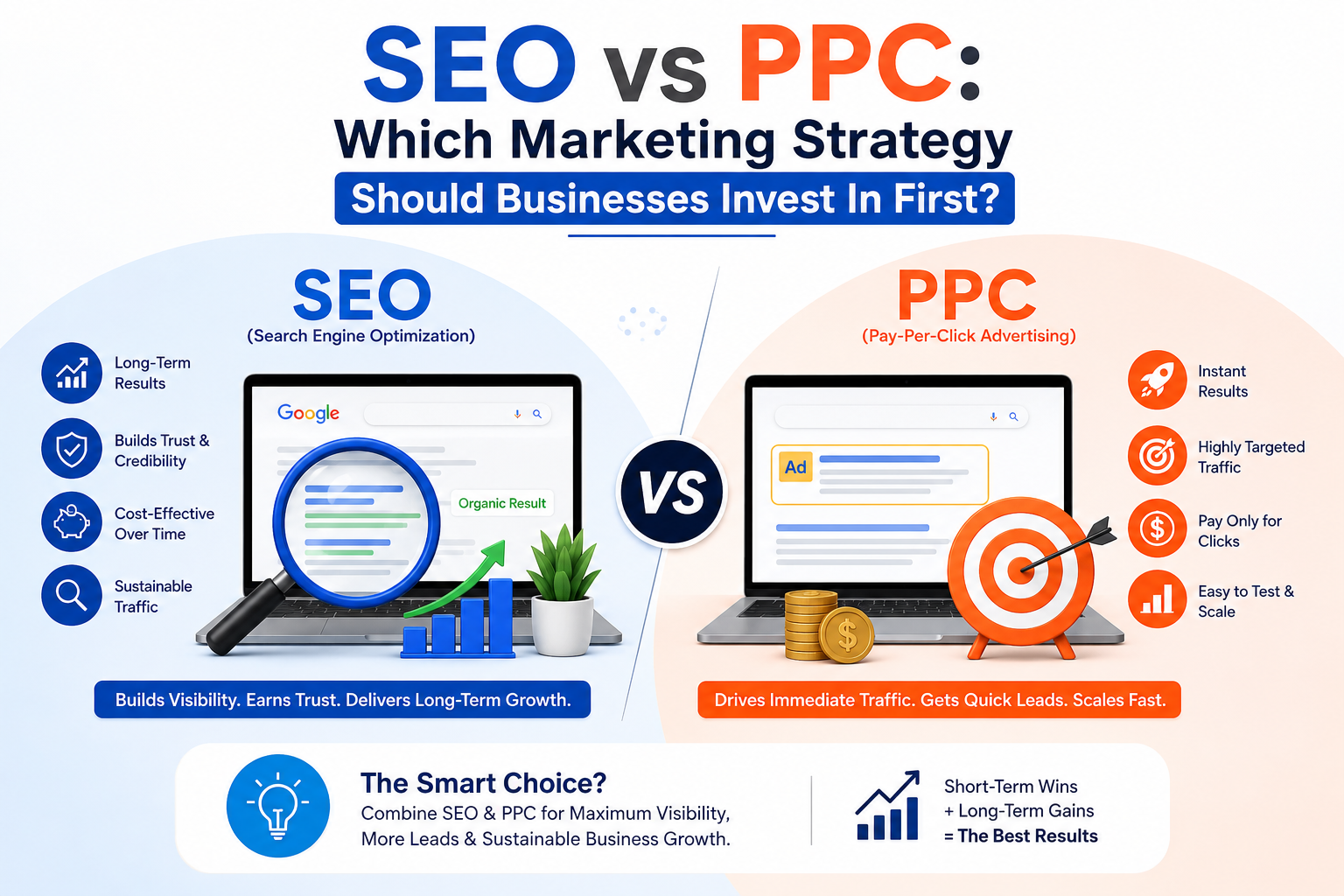
Search Engine Optimisation (SEO) focuses on improving a website’s visibility in organic search results. Instead of paying for every visitor, businesses optimise their websites so search engines rank them higher for relevant keywords.
SEO usually includes:
- Content optimization
- Technical website improvements
- Link building
- Local SEO
- Keyword targeting
For example, a business that ranks organically for “best accounting software” can attract traffic every month without paying for each click.
One of the biggest benefits of SEO over PPC is sustainability. Once pages rank well, they can continue generating leads for months or even years with ongoing optimisation.
SEO also helps build trust. Many users skip ads and prefer clicking organic results because they see them as more credible.
What Is PPC?
Pay-Per-Click (PPC) advertising allows businesses to place ads at the top of search engine results. Advertisers pay only when someone clicks the ad.
Google Ads is the most common PPC platform, though businesses also run paid campaigns on:
- Bing
PPC works well for businesses that need immediate visibility. A company can launch a campaign today and start receiving traffic within hours.
This makes PPC especially useful for:
- Product launches
- Seasonal promotions
- Time-sensitive campaigns
- New websites without organic rankings
Still, traffic stops the moment the ad budget runs out. That’s the biggest difference in the discussion around long-term SEO vs short-term PPC.
SEO vs PPC: Key Differences
| Factor | SEO | PPC |
| Traffic Source | Organic | Paid |
| Time to Results | 3–6 months | Immediate |
| Cost Structure | Ongoing optimization | Pay per click |
| Long-Term ROI | High | Moderate |
| Sustainability | Long-lasting | Stops when ads stop |
| Trust Level | Higher | Moderate |
| Scalability | Gradual growth | Fast scaling |
The table above highlights why businesses often struggle to answer the question: Which is better SEO or PPC?
The answer depends on goals, budget, competition, and timeline.
When SEO Makes More Sense
SEO works best for businesses focused on long-term growth. It may take several months to gain traction, but the long-term payoff can be significant.
Businesses that benefit most from SEO include:
- Local service providers
- SaaS companies
- E-commerce brands
- B2B businesses
- Professional service firms
Imagine a law firm investing in SEO for local keywords. Once the site ranks well, it can generate consistent leads without paying for every visitor.
This is why many businesses view SEO as a long-term asset rather than a short-term marketing tactic.
Another major advantage is cost efficiency over time. While SEO requires ongoing investment, the cost per lead often decreases as rankings improve. That’s one reason many companies search for an affordable seo company that can build sustainable growth instead of relying completely on paid advertising.
When PPC Is the Better Choice
PPC is ideal when businesses need fast results.
For example:
- An eCommerce store running a holiday sale
- A startup launching a new product
- A real estate company promoting limited inventory
- A SaaS brand testing a new market
PPC also gives businesses valuable keyword and conversion data quickly. Companies can test headlines, landing pages, and offers without waiting months for organic rankings.
In competitive industries, PPC may also be necessary because ranking organically can take a long time.
Still, PPC costs can rise quickly in industries with expensive keywords. Legal, insurance, and finance sectors often see very high cost-per-click rates.
That’s why many businesses eventually shift toward SEO once they establish initial traction.
SEO vs PPC ROI: Which Delivers Better Returns?
When businesses compare SEO vs PPC ROI, the timeline matters.
PPC usually delivers faster results. Businesses can generate leads almost immediately if campaigns are optimized properly.
SEO takes longer, but the returns often compound over time.
For example:
- A PPC campaign may bring 500 visitors this month
- SEO content may bring fewer visitors initially
- After six months, that same SEO content could generate traffic continuously without additional ad costs
This makes SEO more cost-effective in the long run for many businesses.
PPC, however, still plays a critical role because it provides:
- Immediate visibility
- Faster testing
- Predictable traffic
- Precise audience targeting
The smartest businesses rarely choose one strategy exclusively. Instead, they combine both.
Why Combining SEO and PPC Works Best
Businesses that integrate SEO and PPC often see stronger overall performance.
Here’s why:
1. More Search Visibility
Appearing in both paid and organic results increases brand exposure and improves click opportunities.
2. Better Keyword Insights
PPC campaigns reveal which keywords convert best. Businesses can then target those keywords organically through SEO content.
3. Higher Conversion Opportunities
SEO brings in long-term traffic, while PPC retargets visitors who didn’t convert the first time.
4. Reduced Marketing Risk
Relying entirely on one traffic source can be risky. Combining both creates a more balanced marketing strategy.
This approach is especially valuable for agencies offering digital marketing services or operating as a white label seo company supporting multiple clients.
How AI and Search Trends Are Changing SEO and PPC
Search marketing continues to evolve rapidly.
Google’s AI-driven search results and zero-click searches are changing how users interact with content. Businesses now need:
- More helpful content
- Stronger brand authority
- Better user experience
- Smarter keyword targeting
At the same time, PPC competition continues increasing, which drives up ad costs in many industries.
Businesses that focus only on paid ads may struggle with rising acquisition costs over time. SEO helps balance those costs by building organic visibility that doesn’t disappear when campaigns stop.
Which Is Better SEO or PPC? Final Verdict
There’s no universal winner in the seo vs ppc debate.
SEO is better for:
- Long-term traffic
- Brand authority
- Sustainable lead generation
- Lower long-term acquisition costs
PPC is better for:
- Immediate traffic
- Fast testing
- Promotions and launches
- Highly competitive markets
For most businesses, the best strategy is a combination of both.
PPC can generate quick wins while SEO builds long-term growth in the background. Together, they create a stronger and more reliable marketing foundation.
If your business wants sustainable growth without overspending on ads, partnering with an experienced and affordable seo company can help create the right balance between organic and paid marketing.
At Sinelogix Technologies, we help businesses build customized SEO and PPC strategies designed around real business goals, not generic marketing trends.