
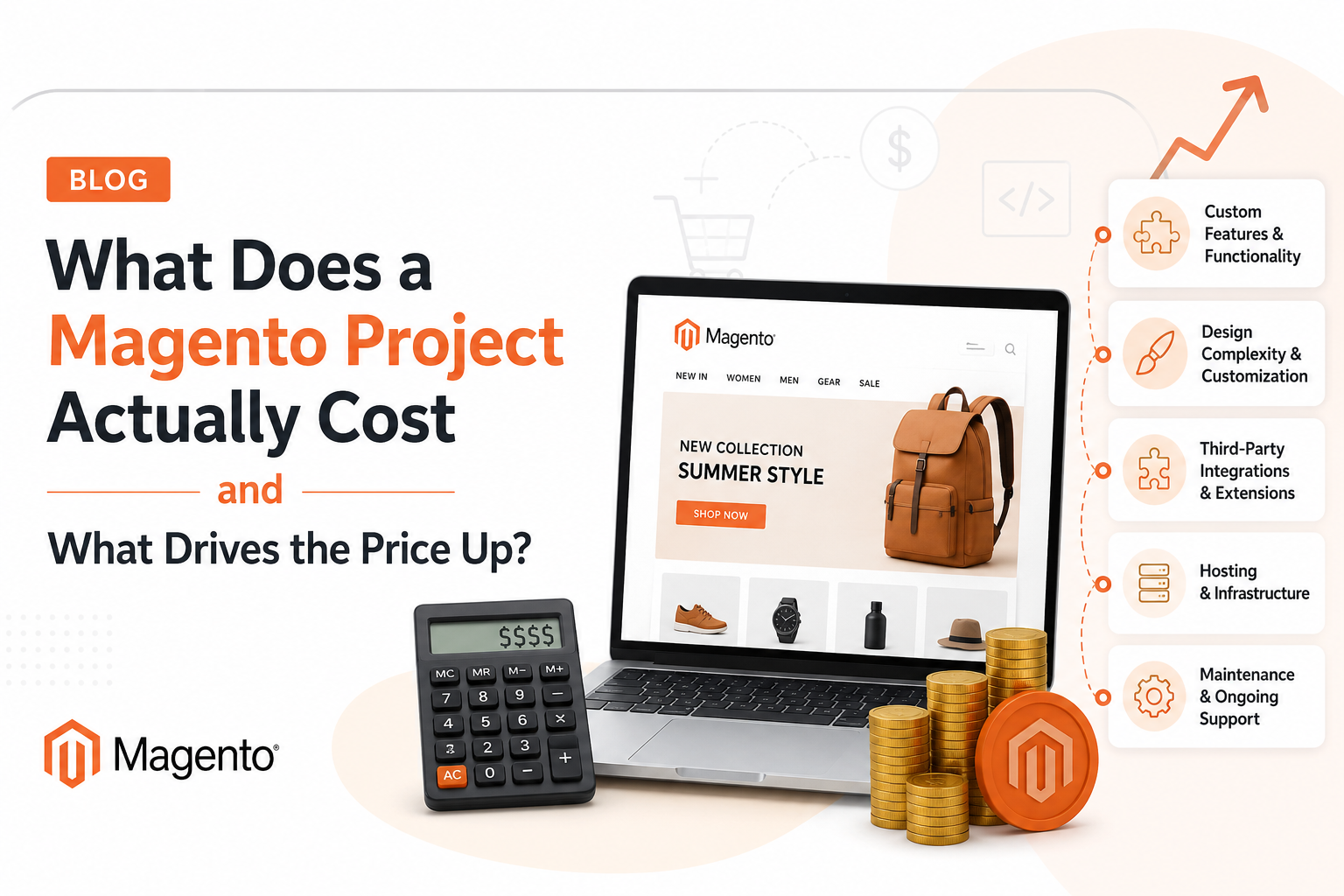
Many businesses choose Magento because they need a powerful e-commerce platform that can handle complex products, large catalogues, multiple integrations, and growing customer demands. However, one of the most common questions companies ask before starting is: ” How much does a Magento project actually cost?
The answer depends on several factors, including design requirements, custom features, integrations, development approach, and long term support. The Magento development cost is not fixed because every ecommerce business has different goals and technical needs.
A simple Magento store may require a smaller investment, while an advanced ecommerce platform with custom workflows and enterprise features can require a much larger budget. Understanding what influences the cost helps businesses plan better and choose the right development partner.
Average Magento Project Cost: What Should You Expect?
The cost of a Magento project can vary widely depending on the size and complexity of the store. A basic Magento website with standard features may cost less, while a fully customized ecommerce solution requires more time and expertise.
Generally, businesses need to consider expenses related to:
- Website design and user experience
- Magento development and customization
- Third party integrations
- Extensions and additional features
- Hosting and security
- Testing and maintenance
When companies calculate their Magento website development cost, they should focus on value rather than only the initial price. A cheaper solution may not always provide the performance, scalability, or flexibility needed for future growth.
Key Factors That Increase Magento Development Cost
1. Custom Design and User Experience Requirements
The design of your e-commerce website plays an important role in the overall project cost. A ready-made Magento theme can reduce development time, but many businesses prefer a unique design that matches their brand identity.
Custom UI design requires more planning, design revisions, frontend development, and testing. If you need advanced layouts, personalised shopping experiences, or unique customer journeys, the project cost will naturally increase.
A professional design is often worth the investment because it improves customer engagement and helps create a stronger online presence.
2. Custom Magento Features and Functionality
Magento is popular because it allows businesses to create highly customised e-commerce experiences. However, custom functionality requires additional development work.
Examples of features that can increase project costs include:
- Custom product options
- Advanced search functionality
- Customer specific pricing
- Subscription features
- Custom checkout process
- B2B ecommerce features
- Automated business workflows
Every custom feature requires planning, coding, testing, and future maintenance. The more unique requirements you add, the more time developers need to complete the project.
3. Magento Extensions and Third-Party Integrations
Magento stores often require integrations with external platforms such as payment gateways, ERP systems, CRM tools, shipping providers, and marketing platforms.
Some integrations are simple, while others require custom development to ensure smooth data exchange.
Paid Magento extensions can also impact the overall budget. Businesses should evaluate whether an extension solves their requirements or needs additional customisation.
Choosing the right combination of extensions helps control costs while maintaining website performance.
4. Magento Migration and Upgrade Requirements
Businesses moving from another e-commerce platform to Magento often need migration services. Data migration involves transferring products, customers, orders, categories, and other important information.
Magento upgrades can also affect project pricing because developers need to check compatibility, update custom features, and test the complete website.
A detailed migration plan reduces risks and prevents unexpected expenses during development.
5. Development Team and Location
The development team you choose has a direct impact on the project budget. Hiring freelancers, local agencies, or offshore teams can create different pricing structures.
Many businesses consider Magento outsourcing development cost because outsourcing provides access to experienced developers without building an internal team.
However, choosing the lowest priced option can create challenges if the team lacks Magento expertise. A reliable partner focuses on quality, security, performance, and long term success.
Working with a trusted Magento development company helps businesses avoid costly mistakes and ensures the platform is built according to business requirements.
Why Magento Projects Can Cost More Than Other Ecommerce Platforms
Magento is designed for businesses that need flexibility and scalability. Compared to simpler ecommerce platforms, Magento offers advanced customization options, powerful features, and better control over complex operations.
High volume ecommerce businesses often choose Magento because they need a platform that can support growth, manage large product catalogs, and handle complex integrations. Many successful brands invest in Magento because the platform provides long term benefits instead of only focusing on short term savings.
You can explore more about why businesses continue investing in Magento solutions in this guide on why large ecommerce stores prefer Magento over cheaper alternatives.
How to Reduce Magento Project Costs Without Compromising Quality
Managing your Magento budget does not mean choosing the cheapest development option. Instead, focus on smart planning.
Here are some ways businesses can control costs:
- Define project requirements clearly before development starts
- Prioritize essential features first
- Avoid unnecessary customizations
- Select reliable extensions
- Plan future scalability
- Work with experienced Magento professionals
A proper strategy helps prevent unexpected expenses and reduces the need for costly changes later.
Final Thoughts
The actual cost of a Magento project depends on your business goals, technical requirements, and level of customization. There is no single price that fits every ecommerce store.
A small Magento website may require a limited investment, while a large enterprise solution can involve a much bigger budget. Factors like custom design, integrations, migration, extensions, and development expertise all influence the final price.
Instead of focusing only on cost, businesses should consider the long term value Magento provides. Choosing the right development partner can help create a secure, scalable, and high performing ecommerce platform that supports business growth.