Choosing the right eCommerce platform is easy when a business is small. The challenge begins when that business starts scaling rapidly. More traffic, larger product catalogues, international expansion, and complex workflows can quickly expose platform limitations that were never noticeable in the early stages.
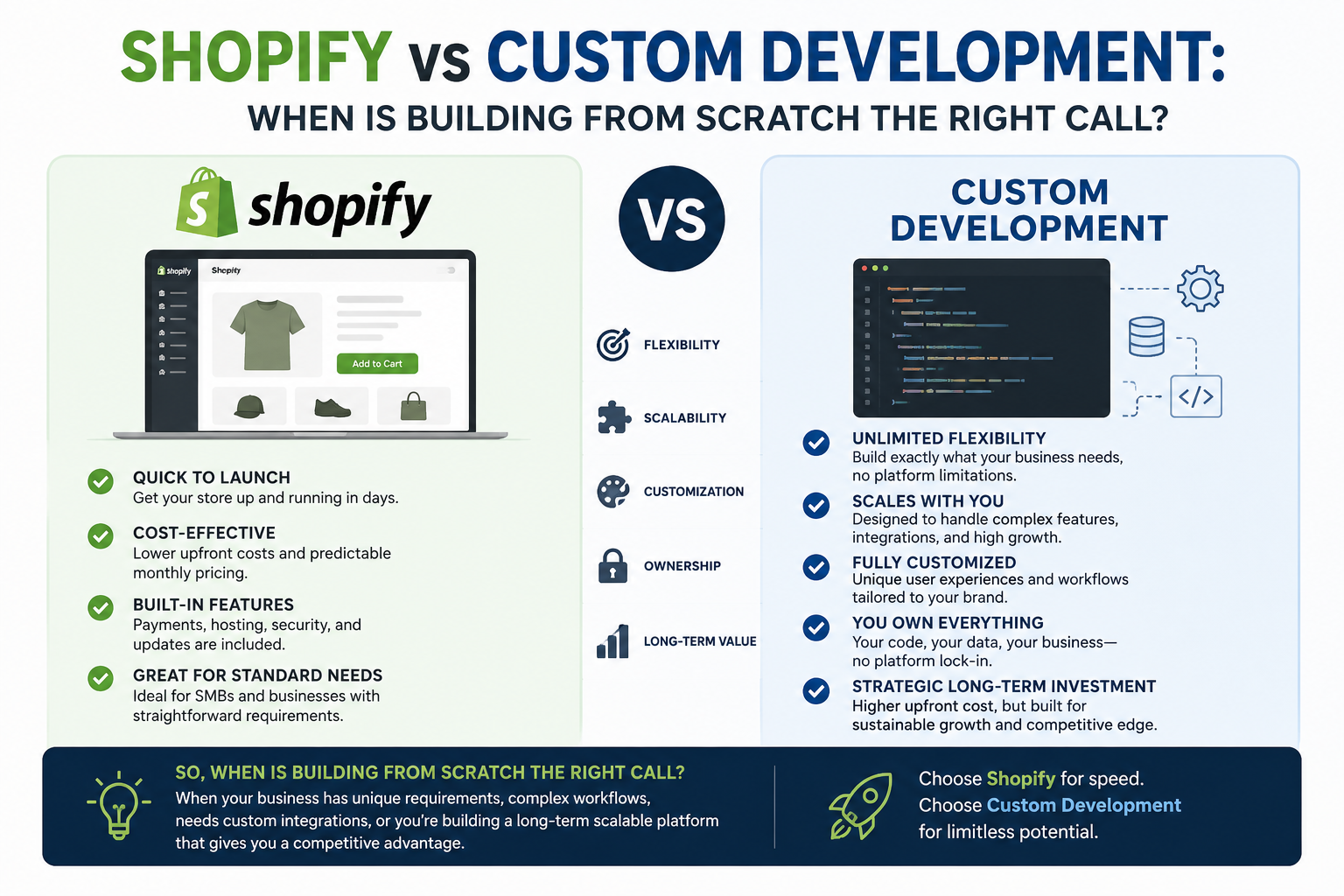
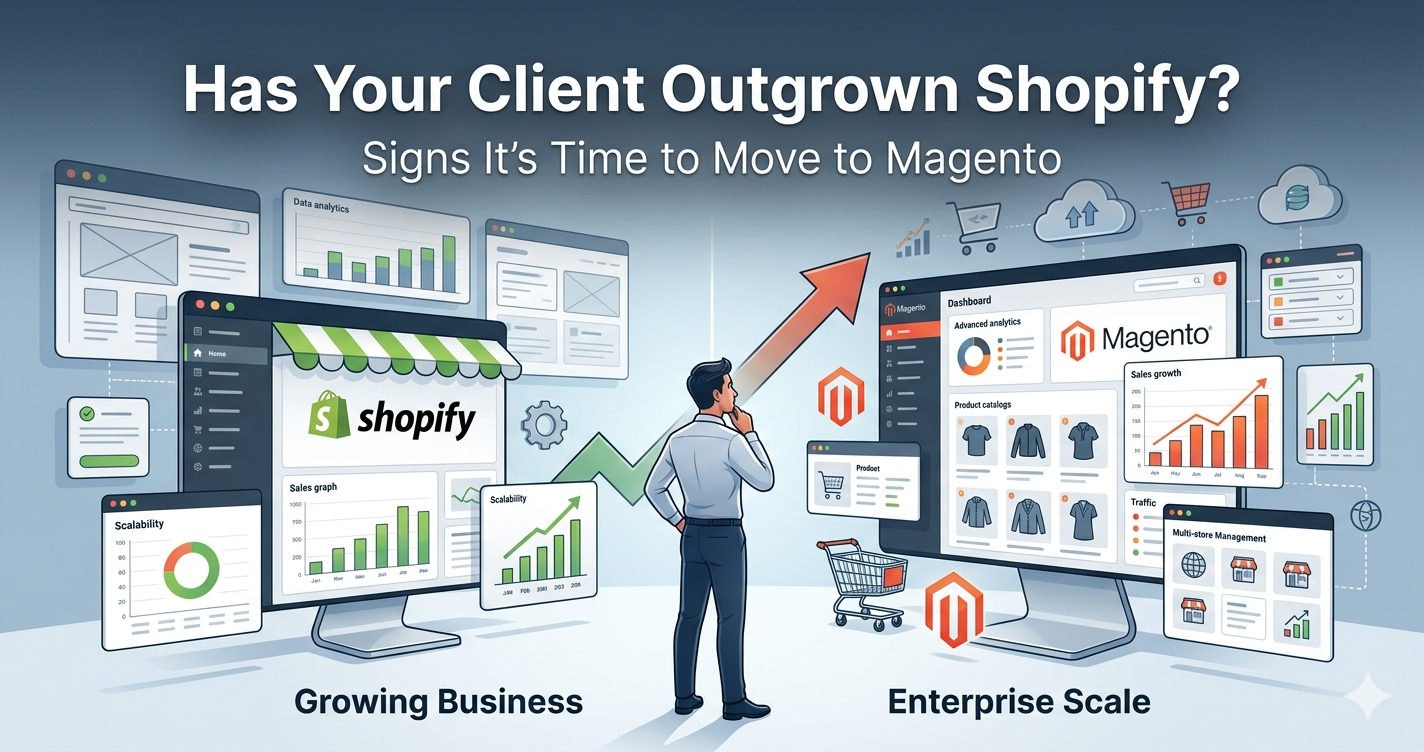
Shopify is an excellent platform for startups and growing brands because it offers simplicity, fast deployment, and low technical overhead. However, there comes a point when convenience starts creating operational bottlenecks. That is usually when businesses begin asking an important question: when to migrate from Shopify to Magento?
The answer depends on how complex the business has become and whether Shopify can still support long-term growth without forcing costly workarounds.
Why Shopify Works Well Initially
There is a reason Shopify powers millions of online stores globally. Businesses can launch quickly, manage products easily, and avoid worrying about hosting or server management.
For small and medium-sized businesses, Shopify offers:
- Faster store setup
- User-friendly management
- Large app ecosystem
- Lower upfront investment
- Simplified maintenance
This makes Shopify ideal for businesses focused on speed and simplicity.
But growth changes everything.
A store handling a few hundred products behaves very differently from a business managing thousands of SKUs, regional storefronts, B2B pricing models, and ERP integrations.
The First Sign: App Dependency Starts Growing
One of the biggest warning signs is excessive reliance on third-party apps.
At first, Shopify apps seem convenient. Need advanced filtering? Install an app. Want subscriptions? Add another app. Need multilingual functionality or custom checkout logic? More apps.
Over time, this creates:
- Rising monthly operational costs
- App conflicts
- Slower site performance
- Backend management complexity
Many enterprise businesses eventually realize they are paying for dozens of apps just to achieve workflows that Magento can support natively or through custom development.
This is also where businesses begin questioning when does Shopify become too expensive for scaling operations.
The platform itself may appear affordable initially, but app subscriptions, transaction fees, and workaround development costs can increase significantly over time.
Operational Complexity Begins Slowing Teams Down
Another major indicator appears in backend operations.
As stores grow, teams often struggle with:
- Large inventory management
- Bulk product updates
- Complex product variations
- Multi-warehouse synchronization
- Advanced pricing structures
For example, a fashion retailer managing 100,000+ SKUs across multiple countries may experience severe workflow inefficiencies inside Shopify’s backend.
These are common Shopify limitations enterprise ecommerce brands encounter during scaling phases.
Magento was designed with operational flexibility in mind. Its architecture supports more advanced product structures, larger catalogues, and customized workflows for growing businesses.
International Expansion Creates New Challenges
Expanding globally sounds exciting until operational limitations begin affecting customer experience.
Growing businesses often require:
- Multi-language storefronts
- Country-specific pricing
- Regional tax configurations
- Local payment methods
- Multi-currency support
Shopify supports some of these capabilities, but enterprise businesses often outgrow the platform’s flexibility.
Magento provides stronger control over:
- Multi-store management
- Localization
- Regional catalogues
- Customer segmentation
- Global inventory workflows
This is one reason many international brands eventually move toward Magento as they scale into multiple markets.
Checkout and Customization Restrictions Impact Revenue
Custom customer journeys matter more as businesses become larger and more competitive.
Enterprise brands frequently require:
- Personalized checkout experiences
- Custom promotions
- Complex loyalty programs
- Advanced product bundles
- Dynamic pricing models
Shopify’s hosted ecosystem limits backend flexibility in several areas, especially around checkout customization unless businesses invest in Shopify Plus.
Even then, businesses often encounter restrictions compared to Magento’s open-source flexibility.
This becomes a serious concern for companies focused on conversion optimization and personalized user experiences.
Performance Problems During High-Traffic Events
Traffic spikes reveal platform weaknesses quickly.
Businesses running large-scale campaigns during:
- Black Friday
- Seasonal sales
- Product launches
- International promotions
may experience slower page speed and checkout delays if multiple apps overload the system.
Magento gives businesses greater control over:
- Hosting infrastructure
- Caching systems
- Performance optimization
- Server resources
This level of control is one reason many companies researching Shopify vs Magento for large businesses choose Magento for long-term scalability.
ERP and CRM Integrations Become More Complicated
As operations mature, businesses depend heavily on integrations with:
- ERP systems
- CRM platforms
- Warehouse software
- Inventory management tools
- Accounting systems
Shopify integrations work well for simpler setups, but highly customized workflows can become difficult to manage at scale.
Magento’s flexibility allows developers to build tailored integrations that align with complex operational requirements instead of forcing businesses to adapt their processes around platform limitations.
Is Magento Better Than Shopify for Large Stores?
The answer depends on business complexity.
For smaller businesses with straightforward operations, Shopify remains a practical and cost-effective solution.
But if a business requires:
- Advanced customization
- Enterprise-level scalability
- Large inventory management
- Multi-store operations
- B2B functionality
- Complex integrations
then Magento often becomes the stronger long-term platform.
So, is Magento better than Shopify for large stores? In many enterprise scenarios, yes — especially when operational flexibility and scalability become top priorities.
If you want a broader comparison between both platforms, this detailed guide on Shopify vs Magento and which platform to recommend to clients explains the strengths and limitations of each platform in more depth:
The Cost of Waiting Too Long to Migrate
One mistake many growing brands make is delaying migration for too long.
Over time, businesses accumulate:
- More apps
- More workarounds
- Larger databases
- More operational complexity
This increases migration difficulty later.
Delaying platform changes can also result in:
- Reduced team productivity
- Higher operational costs
- Slower customer experiences
- SEO challenges
- Revenue limitations
A well-planned Shopify to Magento migration guide focuses not just on platform movement, but on improving scalability, workflow efficiency, and long-term business performance.
Magento Is Not the Right Choice for Every Business
It is important to stay balanced here.
Magento is powerful, but it also requires:
- Technical expertise
- Ongoing maintenance
- Hosting management
- Development investment
Businesses with simple operational requirements may not need Magento at all.
The ideal migration point happens when operational growth starts outpacing Shopify’s flexibility.
That is when Magento begins delivering measurable business value instead of unnecessary complexity.
Final Thoughts
Choosing between Shopify and Magento is not about selecting the “better” platform overall. It is about selecting the platform that matches the business’s current and future operational needs.
Shopify works exceptionally well for businesses focused on simplicity and fast deployment. However, rapid growth often introduces customization, integration, and scalability challenges that Shopify may struggle to support efficiently.
Understanding when to migrate from Shopify to Magento can help businesses avoid costly operational bottlenecks and prepare for sustainable long-term growth.
At Sinelogix Technologies, a trusted Magento website development company in India, we help growing eCommerce brands evaluate platform scalability, optimize migration strategies, and build Magento solutions designed for complex business operations. Whether you are planning a future migration or assessing your current platform limitations, choosing the right strategy early can save significant time, cost, and technical challenges later.